Why Everyone Is Launching an AI Product Right Now
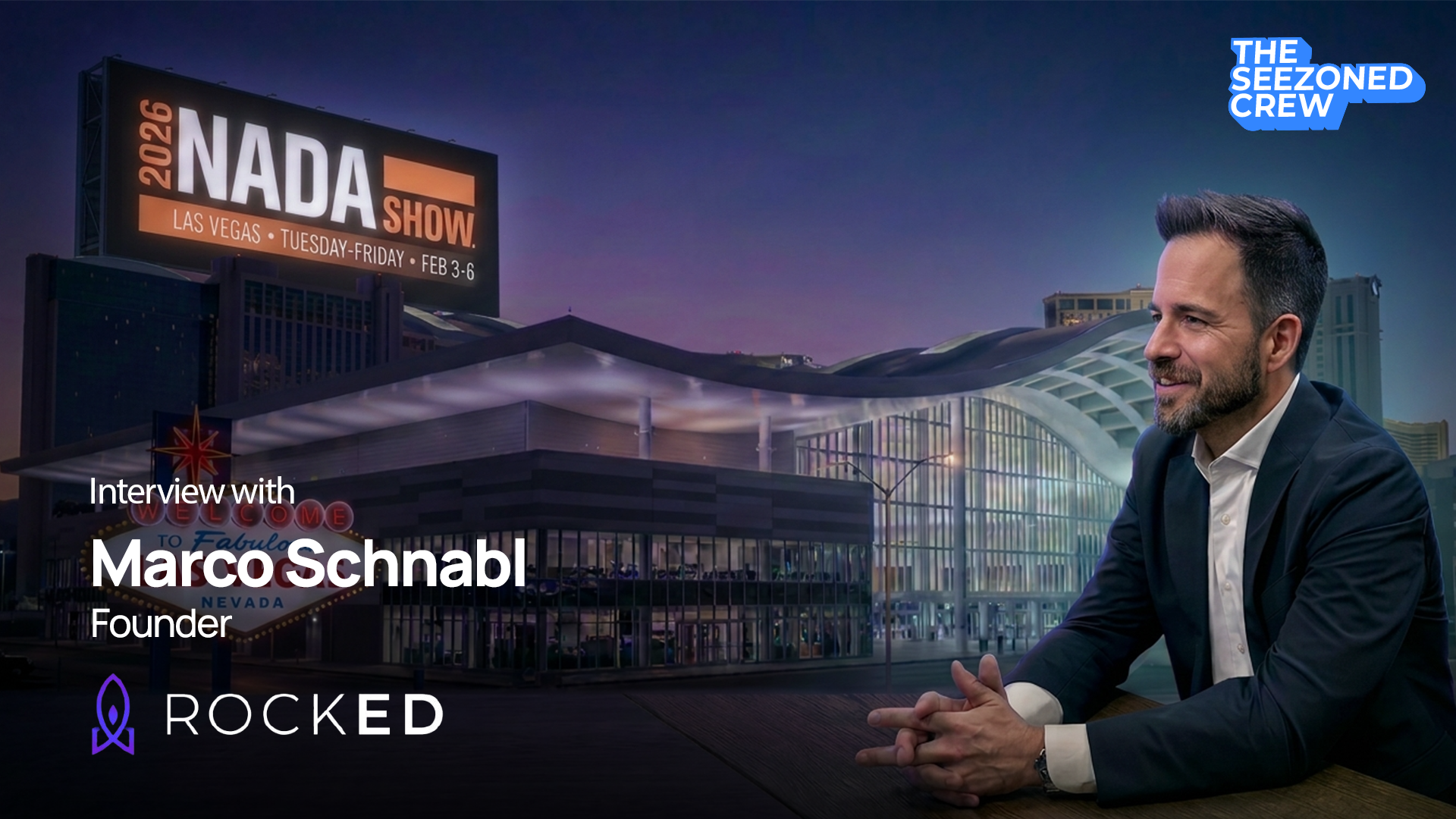
Marco Schnabl, founder of AutomotiveMasterminds and CEO of RockED, has spent over 13 years at the intersection of automotive retail and technology in the US. At NADA Show in Las Vegas what many in the industry call the Super Bowl of automotive the conversation turned to where AI truly fits in the dealership, what it can't yet replace, and the rapidly escalating threat of AI powered fraud that most dealers aren't paying attention to.
You’ve worked with dealerships, OEMs, and data platforms. What makes automotive uniquely challenging for AI compared to other retail industries?
Automotive is unique because it is still such a people-forward business. Buying a car is usually the second largest purchase someone makes after buying a home. It is emotional, personal, and often built on trust. Customers are not simply adding something to a cart. They are making a major decision and often need guidance, reassurance, and a real conversation before moving forward.
AI can support the process, make things faster, and improve parts of the customer journey. But in automotive, the human role is still very important, especially when it comes to helping customers feel confident about buying or servicing a car. Salespeople and service advisors still play an important part in helping customers make the right decision and feel comfortable throughout the process.
Nearly a decade after AutomotiveMastermind launched, what misconceptions do dealers still have about customer behavior analytics?
One of the biggest misconceptions is that data or technology alone solves the problem. Customer behavior analytics can be powerful, but the value comes from how well that information is used inside the dealership. If frontline teams do not know how to act on those insights, the data becomes just another tool instead of something that improves performance.
The real opportunity is making customer insights practical, timely, and easy to use for the people who are actually speaking to customers every day.
AI was everywhere at NADA this year. What does that say about where the automotive industry is heading?
AI was clearly one of the biggest themes at NADA. Almost every company seemed to have an AI angle in its product, pitch, or conversation. But the real question is whether that AI is creating clear value for dealers or simply becoming part of the industry buzz.
The pace of innovation is moving quickly, and AI is helping companies build, test, and launch products faster than before. That creates excitement, but it also means dealers need to look carefully at what each solution actually does. The market will eventually decide which tools are useful and which ones are just part of the noise.
For dealerships, the takeaway is that AI is no longer something sitting on the sidelines. It is becoming part of the conversation across products, operations, training, and customer experience. The challenge now is knowing which solutions genuinely help the business.
From your work with RockED, what’s the biggest gap between what frontline teams are trained on and what the job actually demands today?
The biggest gap is that training is often not built around how dealership teams actually work. Employees may have training from OEMs, vendors, and internal teams, often spread across several different platforms. That makes it harder for them to find what they need and use it in the moment.
RockED focuses on solving this through short, mobile-first learning that is relevant to the employee’s role, dealership, brand, tools, and processes. The idea is simple: instead of long training sessions that people forget quickly, give teams small pieces of useful learning every day. That helps them build knowledge over time and perform better in the real world.
Everyone is focused on generative AI. What’s the next AI shift dealerships should be paying attention to that isn’t getting enough attention yet?
Fraud prevention is one area dealerships need to pay closer attention to. AI creates huge opportunities, but it also gives bad actors better tools. Fake documents, deepfakes, identity fraud, and other risks are becoming more sophisticated.
Dealerships need to think seriously about how they protect their business, their employees, and their customers. AI is not only about selling more cars or improving operations. It is also about understanding how the same technology can be misused. Verification, fraud detection, and security should become a bigger part of the AI conversation.
What’s the biggest disconnect between what tech companies build and what dealerships actually need?
The biggest disconnect happens when technology is built around hype instead of dealership reality. Running a dealership is hard. Selling cars, servicing cars, answering phones, managing customers, and keeping teams aligned all require practical solutions that work in the real world.
Dealerships do not just need tools that sound impressive. They need technology that helps employees perform better, supports the customer journey, and fits naturally into existing workflows. If a product solves a real problem, dealers will adopt it. If it does not, the market will move on.
What questions should dealers be asking right now that most of them aren’t?
With AI dominating the conversation at NADA, dealers should be moving the conversation from excitement to execution. The better questions are: what happens after the demo? How does this tool get adopted by the team? Who trains the employees? How does it improve the actual work happening in sales, service, or customer success? A product can look impressive on the show floor, but the real test is whether it fits into the dealership’s daily rhythm and keeps creating value after the event is over. Dealers should be asking for clarity, not just capability: what problem does it solve, how quickly can the team use it, and what kind of ongoing support makes sure it does not become another unused platform?