
The AI Experiment Every Dealership Must Try
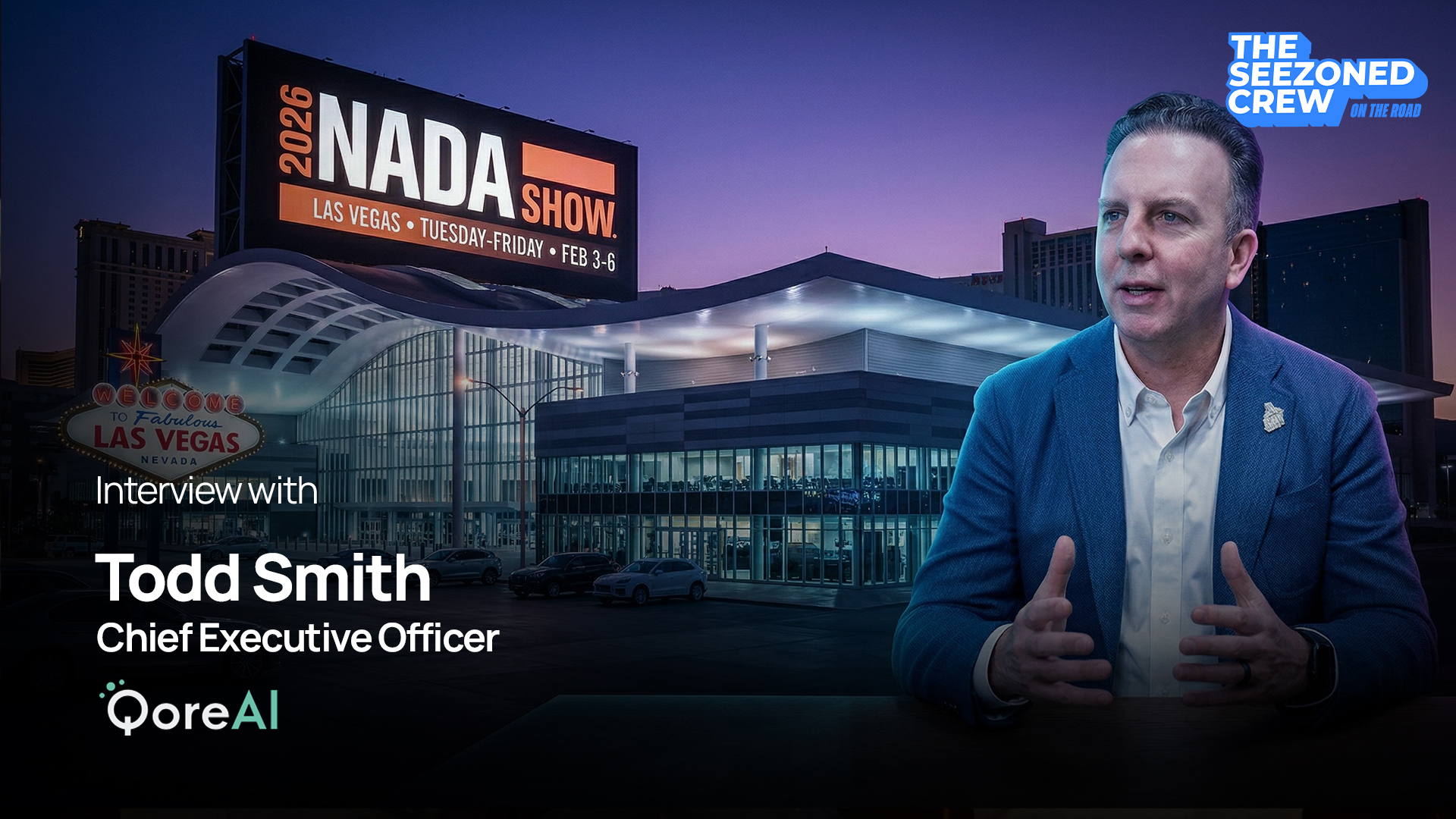
Todd Smith, CEO and founder of QoreAI, has worked across the automotive industry, from running dealerships to building technology companies. At NADA Show 2026, the conversation focused on how AI is actually being applied inside dealerships today, what’s holding dealers back, and where the biggest opportunities lie.
What’s the biggest stumbling block you see when dealerships go through an AI readiness assessment on your website? Have you noticed any patterns or trends?
Many dealers still treat AI like traditional software, expecting it to be plug-and-play. In reality, AI requires continuous experimentation, iteration, and collaboration to deliver strong results. It behaves less like a fixed system and more like something that improves over time with input and refinement. Another common pattern is the operational pressure dealerships face daily. With teams focused on sales, service, and customer issues, it becomes difficult to step back and properly evaluate how AI fits into the business. As a result, dealerships that prioritize education and hands-on experimentation tend to be far more prepared and successful in adopting AI.
If a dealership does nothing with AI for the next few years, what do you think they risk falling behind on first?
Dealerships that delay AI adoption risk falling behind in core areas like operational efficiency, speed, and consistency. AI is quickly becoming essential for handling large volumes of tasks, reducing errors, and improving overall performance. Dealers that adopt AI early will be able to scale operations more effectively without increasing headcount. Over time, this creates a significant competitive gap. Waiting several years to adopt AI will not just slow growth; it will make it increasingly difficult to compete in a market that has already evolved.
Your book ‘The Intelligent Dealership,' lays out a step-by-step approach. What’s one step that most dealers underestimate but has high leverage?
Data. That’s the starting point. A lot of dealership systems, especially DMS data, are clunky and full of duplicates. If you plug AI straight into that, you’re not fixing anything. You’re accelerating the problem. It’s like pouring gas on fire. It spreads everywhere, and now you’re dealing with it at scale.
And that’s where things can go wrong fast. You start getting bad interactions, wrong recommendations, and things that don’t make sense to the customer. Not because AI is broken, but because what it’s running on isn’t right.
The step that gets overlooked is putting a proper process in place before anything else. Start by organizing the data, cleaning it up, and then building on top of it. Add more context where it’s needed. That’s when it starts to get powerful. Otherwise, you’re just moving faster in the wrong direction.
How do you help dealers overcome the fear that AI will replace people rather than augment them?
A practical way to address this concern is by looking at how work is structured inside a dealership. Each role is made up of multiple workflows rather than a single function. AI typically supports these workflows individually, starting with repetitive and time-consuming tasks such as administrative work and data handling. This allows dealership teams to focus more on customer experience and higher-value activities. Instead of replacing jobs immediately, AI improves efficiency and consistency within existing roles, leading to better outcomes overall.
For a dealer who didn’t attend NADA, what would you say they missed in terms of understanding where the industry is headed?
Dealers who did not attend NADA missed exposure to how quickly technology is evolving across industries. Events like NADA provide a broader perspective beyond daily dealership operations. Many of the most impactful innovations in automotive are inspired by solutions from other sectors. For example, robotics and automation systems originally developed for industries like healthcare and logistics are now being adapted to dealership service operations. Experiencing these innovations firsthand helps dealerships identify new opportunities to improve efficiency and customer experience.
Did the conversation around AI feel more grounded and practical this year, or was there still a lot of experimentation and hype?
The conversation around AI has become more grounded and practical compared to previous years. There is a clear shift from questioning the relevance of AI to focusing on real-world implementation. At the same time, experimentation remains a key part of the process. AI is not a one-time deployment but an evolving capability that improves with continuous use and refinement. Dealerships are beginning to recognize that working with AI requires an ongoing approach rather than a fixed solution.
Were there any AI use cases at NADA that felt truly practical, not just exciting on paper? Anything that really caught your eye?
Many of the most practical AI use cases at NADA were focused on improving internal dealership operations. Back-office automation, workflow optimization, and error reduction are areas where AI is already delivering tangible value. These applications may not always be the most visible, but they have a direct impact on efficiency and profitability. There were also examples of robotics being used in service departments to reduce time spent on repetitive tasks, such as moving parts between locations. These types of solutions highlight how AI can be applied in practical ways to improve day-to-day dealership performance.